
INVESTIGATIVE REPORT
Verified Editorial
Source: BharathPulse Exclusive
⚡ Key Takeaways
- The Ahmedabad Plane Crash Air India Flight 171 — June 12, 2025...
INVESTIGATIVE REPORT

The Ahmedabad Plane Crash
Air India Flight 171 — June 12, 2025
The Deadliest Aviation Disaster of the 2020s
Rescue personnel at the crash site in Meghani Nagar, Ahmedabad — June 12, 2025
KEY FACTS AT A GLANCE
Flight | Air India AI-171 (AIC171 / AIRINDIA 171) |
Date | 12 June 2025, 13:38 IST |
Route | Sardar Vallabhbhai Patel Intl. Airport, Ahmedabad → London Gatwick Airport |
Aircraft | Boeing 787-8 Dreamliner, Registration VT-ANB (delivered Jan 2014) |
Persons aboard | 242 (230 passengers + 12 crew) |
Nationality mix | 169 Indian • 53 British • 7 Portuguese • 1 Canadian |
Fatalities | 241 onboard + 19 on ground = 260 total |
Injuries | 1 onboard (sole survivor) + 67 on ground |
Crash site | B. J. Medical College Hostel, Meghani Nagar, Ahmedabad |
Cause (interim) | Both engine fuel-cutoff switches flipped to CUTOFF within 1 second of each other shortly after takeoff — cause of switch movement under investigation |
Introduction: India's Worst Air Disaster in Decades
On the afternoon of 12 June 2025, what seemed like a routine departure from Ahmedabad turned into the deadliest aviation catastrophe India had seen in nearly three decades. Air India Flight 171, a Boeing 787-8 Dreamliner bound for London Gatwick with 242 people on board, gained altitude for no more than thirty seconds before losing all engine power and plunging into a crowded residential neighbourhood on the outskirts of Sardar Vallabhbhai Patel International Airport. The aircraft slammed into the hostel building of B. J. Medical College, triggering a massive explosion and fire that killed 241 of the 242 people aboard — and 19 more on the ground — in a matter of seconds.
The disaster claimed a total of 260 lives and left 68 people injured on the ground, making it the deadliest aviation accident of the 2020s, surpassing even the Jeju Air crash that had shocked the world earlier that year. It was the second deadliest event in Air India's long history — behind only the 1985 bombing of Air India Flight 182 — and the worst civil aviation disaster on Indian soil since the 1996 Charkhi Dadri mid-air collision. For Boeing, it marked the first fatal accident involving the 787 Dreamliner since the aircraft type entered commercial service in 2011.
Within hours, emergency responders from the Army, National Disaster Response Force, fire brigades, and local police descended on the inferno. Prime Minister Narendra Modi — whose home state of Gujarat had been struck — flew to Ahmedabad the following morning to visit the crash site and the sole survivor in hospital. Global leaders, including UK Prime Minister Keir Starmer, expressed condolences and pledged cooperation in the investigation. The United Nations Secretary-General conveyed the world body's sadness at the loss of more than 200 lives.
A year later, as India marks the first anniversary of the tragedy, many families are still awaiting the final report. What happened in those catastrophic thirty seconds remains, in crucial respects, a question investigators have not fully answered.
The Aircraft and the Crew
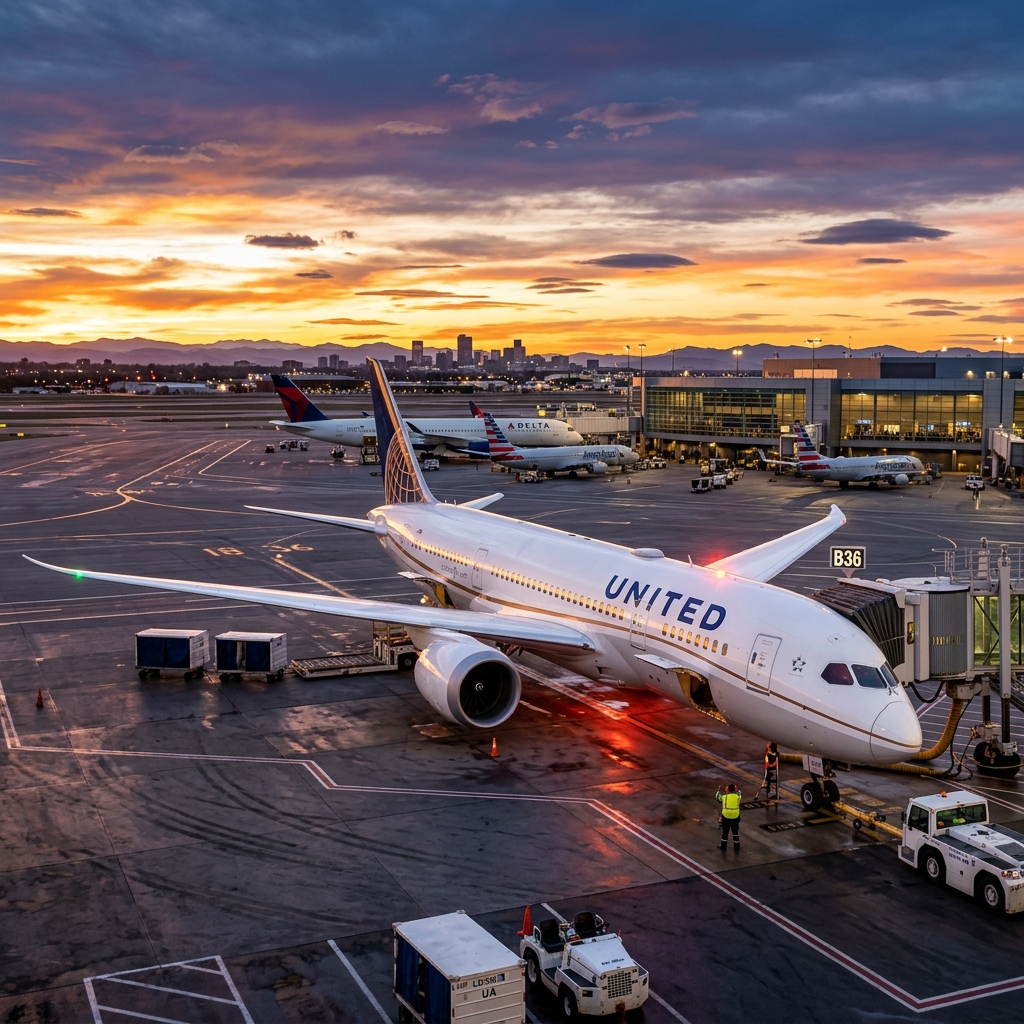
The Boeing 787-8 Dreamliner VT-ANB — first delivered to Air India in January 2014, 12 years before the crash
The Dreamliner: VT-ANB
The aircraft involved in the disaster was a Boeing 787-8 Dreamliner, bearing the registration VT-ANB. It had made its first flight on 11 December 2013 and was delivered new to Air India on 28 January 2014, making it approximately 12 years old at the time of the crash. The Dreamliner is powered by two General Electric GEnx-1B67 engines and is widely regarded as one of the most fuel-efficient and technologically sophisticated wide-body jets in commercial aviation. A maintenance check carried out as recently as 4 May 2025 — just over five weeks before the crash — reportedly found no major problems with the aircraft.
The 787 had, until this accident, an unblemished record: in more than a decade of commercial service across hundreds of operators worldwide, it had never been involved in a fatal accident. The Ahmedabad crash therefore ended one of the most remarkable safety streaks in modern aviation history.
Captain Sumeet Sabharwal
At the controls as pilot-in-command was Captain Sumeet Sabharwal, 56, a highly experienced aviator who had been with Air India since 1994. Sabharwal had accumulated over 15,638 total flying hours, of which at least 8,596 were logged on the Boeing 787 specifically — making him intimately familiar with the Dreamliner. He held a "line training captain" designation, meaning he was qualified to train and supervise co-pilots on live revenue flights. Based in Powai, Mumbai, he was single and lived with his elderly 90-year-old father, Pushkaraj Sabharwal.
First Officer Clive Kundar
Flying with him was First Officer Clive Kundar, who was the pilot actively handling the controls at the moment of takeoff. Between the two of them, the crew logged more than 9,000 flying hours. Kundar was at the controls during the final seconds of the doomed flight. Both pilots perished in the crash.
Timeline: The Final Moments
Flight AI-171 was airborne for less than 30 seconds before losing engine power
13:38 IST — Departure
Flight AI-171 pushed back from Sardar Vallabhbhai Patel International Airport on schedule on the afternoon of Thursday, 12 June 2025. The aircraft taxied to the runway, received its clearance, and accelerated down the strip carrying 230 passengers and 12 crew bound for London Gatwick. The weather was typical of Ahmedabad in June — hot and hazy.
Seconds After Liftoff — The Critical Failure
The Dreamliner lifted off normally. Then, approximately at 08:08:42 UTC (13:38:42 IST), according to the AAIB's preliminary report, a catastrophic chain of events began. The aircraft reached its maximum recorded airspeed of 180 knots — and then the two engine fuel-cutoff switches, one for Engine 1 and one for Engine 2, transitioned from the RUN position to the CUTOFF position in rapid succession, with a time gap of just one second between them. With both engines simultaneously starved of fuel, thrust vanished. The aircraft, still low and slow after takeoff, had no ability to climb. It began to fall.
A Mayday That Could Not Be Answered
A brief Mayday call was transmitted from the cockpit, but there was no time for any intervention. The aircraft, now powerless, descended rapidly over the densely populated Meghani Nagar neighbourhood on the outskirts of the airport perimeter. Within seconds it struck the residential hostel complex of B. J. Medical College. The impact was violent and instantaneous. The aircraft broke apart. Burning jet fuel ignited a massive inferno that reached an estimated temperature of 1,500 degrees Celsius — an intensity that would later complicate the identification of victims.
Impact and Explosion
The 787 carved through multiple buildings in the hostel complex. Parts of five structures were severely damaged or destroyed by the impact and the subsequent fire. CCTV footage captured the grim sequence: the aircraft visibly failing to gain height just seconds after liftoff, then disappearing below the airport perimeter in a cloud of flame and smoke. Emergency services raced toward the billowing column of black smoke. What they found when they arrived was a scene of near-total devastation.
The Human Toll: 260 Lives Lost
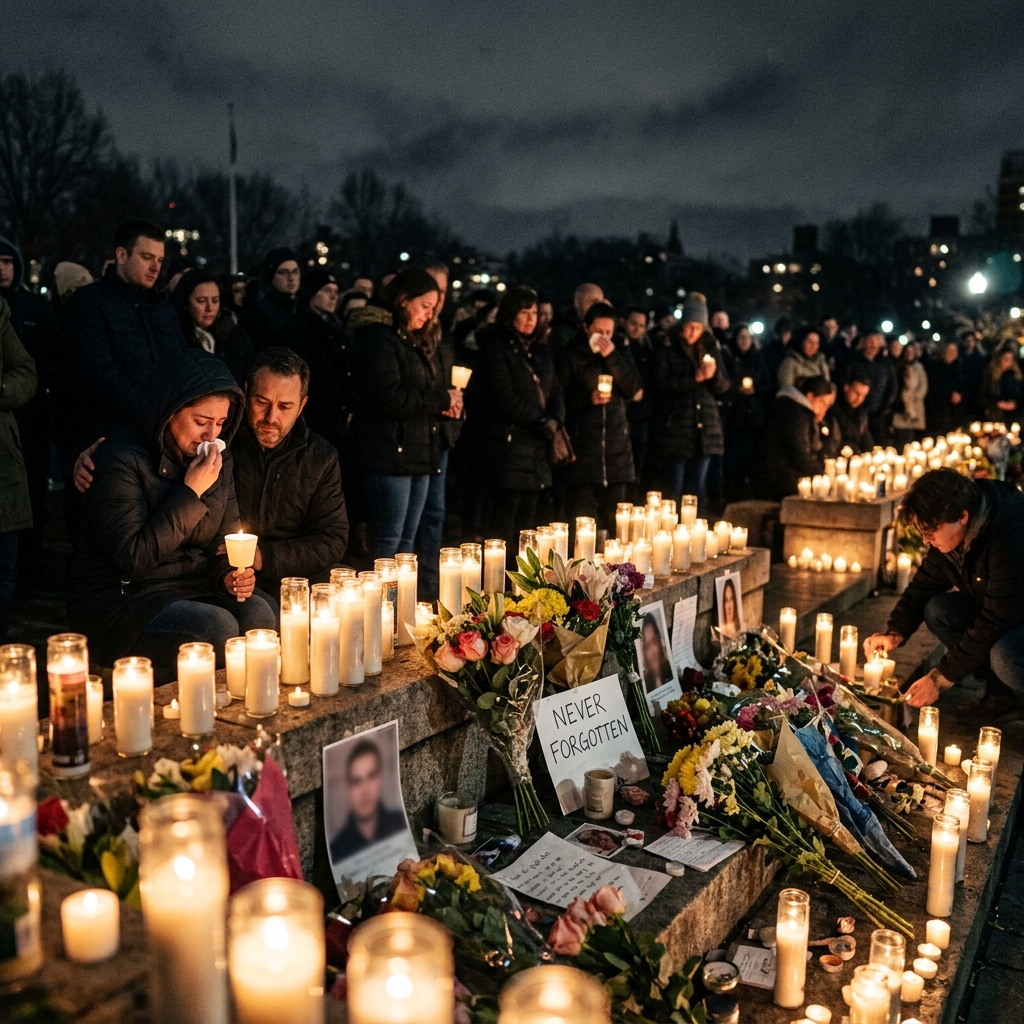
The crash killed 241 of the 242 onboard and 19 people on the ground, with 67 injured
The scale of death was almost incomprehensible. Air India confirmed 241 fatalities among the 242 people who had boarded the flight. Among those on the ground, police initially said 19 people had been killed — many of them students and staff living in the B. J. Medical College hostel — with 67 more injured. The final confirmed total across all sites was 260 dead and 68 injured.
Among the 169 Indian nationals aboard were students, professionals, and families travelling to the United Kingdom. The 53 British nationals included a substantial number of the Indian diaspora. The 7 Portuguese nationals and 1 Canadian were also among the dead. Among the notable casualties was Vijay Rupani, the former Chief Minister of Gujarat who had served in that office from 2016 to 2021. His identity was later confirmed through DNA testing.
The intensity of the fire — reaching 1,500 degrees Celsius — made conventional identification of remains impossible. Around 1,000 DNA tests were conducted by forensic teams to identify victims. By 28 June 2025, DNA testing had confirmed the identities of all 260 fatalities. Some families had to wait weeks before the remains of their loved ones could be released to them. The first six bodies were handed over to families as early as 13 June; others came much later.
On the Ground: Students Killed While They Slept
The timing of the crash — early afternoon — meant the medical college hostel was occupied. Four MBBS students and a doctor's wife were among those killed in the hostel buildings. In at least one heartbreaking case, a 14-year-old boy, Akash Patni, was sleeping on the ground when the aircraft struck the building above him. The crash also wounded dozens of residents and bystanders in the surrounding Meghani Nagar area.
Against All Odds: The Sole Survivor

Vishwash Kumar Ramesh — sole survivor, seat 11A — escaped through an emergency exit
In the wreckage of the worst air disaster of the 2020s, one man survived. Vishwash Kumar Ramesh, a 40-year-old British national of Indian origin, had been seated in seat 11A — a window seat directly next to an emergency exit door. The section of the aircraft where Ramesh sat detached and came to rest on the ground floor of the hostel building. The emergency exit broke open on impact, creating an opening through which Ramesh managed to crawl to safety.
He was found surrounded by flames, debris, and the bodies of fellow passengers. "I am the luckiest man, but also I lost everything," he later told BBC News. "My brother — I lost my brother." His younger brother Ajay, who had been seated just a few rows away, was among the 241 killed. Ramesh was taken to hospital in Ahmedabad, disoriented and suffering multiple injuries across his body. Prime Minister Modi visited him in hospital the following day.
Ramesh was subsequently diagnosed with post-traumatic stress disorder. Months later, he told BBC News that he was still haunted by the horrors of that afternoon — unable to speak to his wife or son, preferring to sit alone in his room. His legal team stated that Air India had made an interim compensation offer of less than $30,000, which they described as wholly inadequate. The airline's CEO, Campbell Wilson, had pledged in the immediate aftermath of the crash that the company would support all those affected "long after the work in Ahmedabad is done."
The Response: Rescue Operations
The emergency response to the crash was massive and immediate. Approximately 130 Indian Army personnel were deployed to the site, including engineering units equipped with heavy machinery — JCBs and cranes — to clear debris and allow rescuers access to the wreckage. Medical teams comprising doctors and paramedics set up field treatment areas adjacent to the crash site. Quick Action Teams (QATs) and fire-fighting units worked to extinguish the blaze and prevent the fire from spreading further into the residential neighbourhood.
Home Minister Amit Shah noted that the inferno created by the burning jet fuel had made rescue operations extremely difficult. The sheer temperature of the fire — at its peak around 1,500 degrees Celsius — consumed large portions of the aircraft and its contents within minutes of impact. State police and the Gujarat Anti-Terrorism Squad (ATS) secured the perimeter while a black box was recovered from the site on 13 June, and a digital voice recorder was retrieved by ATS personnel. A second flight recorder was found in the debris on 16 June.
The Government of Gujarat and the Central Government opened dedicated hotlines for families seeking information about their loved ones. The United Kingdom set up a helpline for British nationals who feared they had someone on the flight. Tata Group — owner of Air India since 2022 — pledged Rs 1 crore (approximately $120,000) to the families of each victim and committed to covering medical expenses of those injured on the ground. Tata Sons Chairman N. Chandrasekaran described the victims' families as "now Tata families," and a memorial trust — the AI-171 Memorial and Welfare Trust — was established in their name.
The Investigation: Black Boxes and a Burning Question
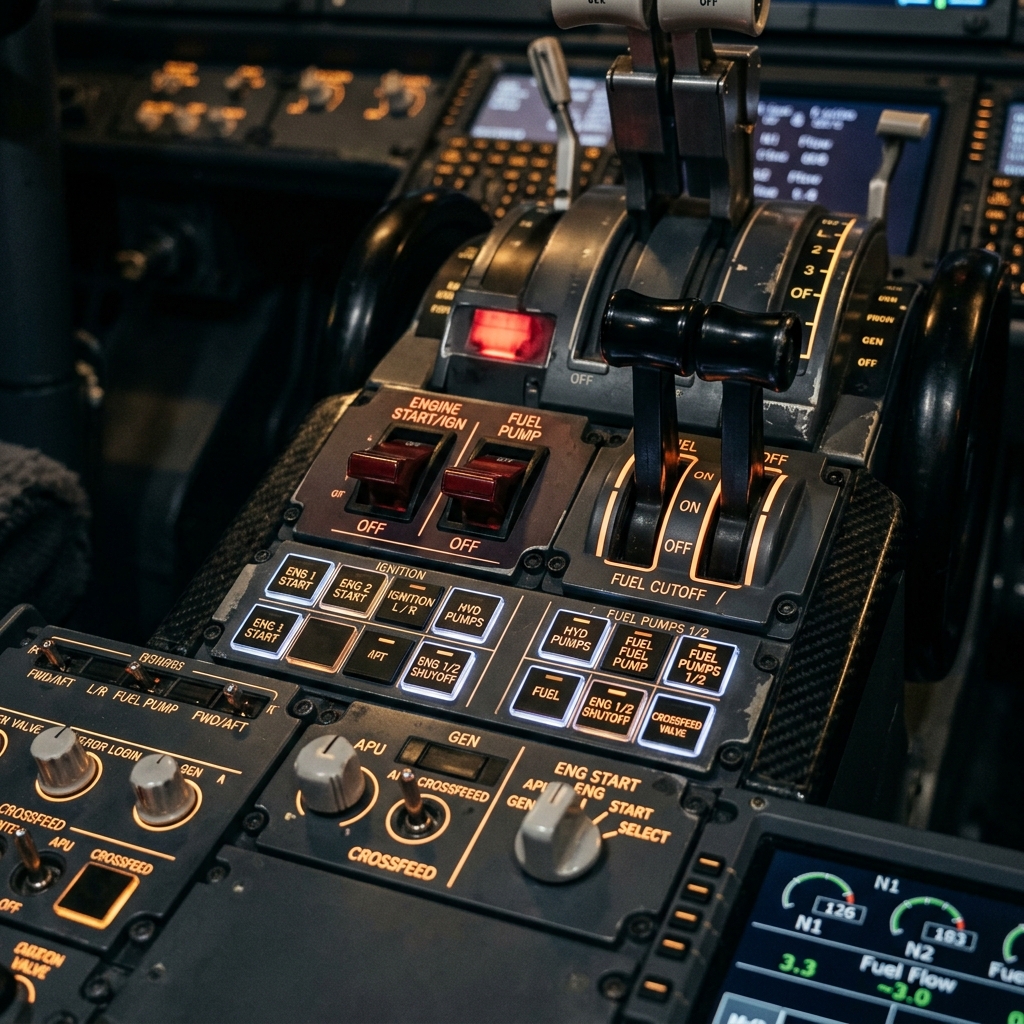
AAIB and NTSB investigators found both engine fuel-cutoff switches had moved to CUTOFF within one second of each other
Recovering the Black Boxes
India's Aircraft Accident Investigation Bureau (AAIB) immediately constituted a multidisciplinary investigation team on 13 June 2025, led by the DG AAIB and including an aviation medicine specialist, an air traffic control officer, and crucially, representatives from the United States' National Transportation Safety Board (NTSB) — a mandatory international protocol since the aircraft was designed and manufactured in America. Both the Cockpit Voice Recorder (CVR) and Flight Data Recorder (FDR) were recovered — one from the rooftop of a building at the crash site on 13 June, the other from the debris on 16 June. Both devices were kept under 24/7 police protection and CCTV surveillance in Ahmedabad until their data could be extracted.
On 24 June 2025, the team began the data extraction process at the AAIB laboratory. By 25 June, the memory module from the CVR had been successfully accessed and its data downloaded. Analysis of the recordings began immediately.
The Preliminary Report: Fuel Switches at the Centre
On 12 July 2025 — exactly one month after the crash, in line with international regulations — the AAIB released its 15-page preliminary report. The findings were stark and startling. According to the report, the aircraft achieved its maximum recorded airspeed of 180 knots at approximately 08:08:42 UTC. Immediately thereafter, the fuel cutoff switches for both Engine 1 and Engine 2 transitioned from the RUN position to the CUTOFF position — one after the other, with a time gap of just one second. With no fuel flowing to either engine, both engines lost power simultaneously. The aircraft, still in the initial climb phase with insufficient altitude and airspeed to glide, fell.
The preliminary report noted a chilling exchange recorded on the CVR: one of the pilots is heard asking the other why he had cut off the fuel. The other pilot responds that he did not do so. The report did not, in its published form, specify which pilot said which line — or who, if anyone, had touched the switches. This deliberate omission was later cited as a source of major controversy.
The Pilot-Error Controversy
Within days of the preliminary report's publication, The Wall Street Journal published a report citing US officials' early assessment of evidence, asserting that the CVR audio showed First Officer Clive Kundar confronting Captain Sabharwal about the switched-off fuel, and that Sabharwal had denied doing it. The report raised the spectre of deliberate action — a theory that Western media rapidly amplified as a potential "suicide by pilot" scenario, pointing to what some claimed were signs of psychological pressure on Sabharwal.
The Indian aviation community and pilots' associations reacted with outrage to these reports. The Federation of Indian Pilots (FIP) issued a statement strongly condemning them. It said the 15-page AAIB report "lacks comprehensive data and appears to rely selectively on paraphrased cockpit voice recordings to suggest pilot error and question the professional competence and integrity of the flight crew." The FIP argued it was far too early to draw any conclusions and called for the pilots' associations to be included in the investigation as observers.
Captain Sabharwal's 91-year-old father, Pushkaraj Sabharwal, publicly demanded a formal court-like investigation under Rule 12 of the Aircraft (Investigation of Accidents and Incidents) Rules, 2017 — in place of the existing Rule 9 inquiry — and accused the AAIB of making "selective leaks" that had fuelled a damaging narrative about his son's mental state. "He is no more, but I have to protect his reputation," he told the BBC. The government denied any impropriety, calling the investigation "very clean" and "very thorough."
A Cascading Systems Failure Theory
Parallel to the pilot-error narrative, a separate investigative account emerged challenging the human-error hypothesis. Citing sources including analysis of the flight data recorder, this account suggested the possibility of a sudden, cascading electrical failure that may have beaten the pilots to the controls — a systemic failure rather than a volitional act. Evidence cited in support of this theory included a Ram Air Turbine (RAT) deployment, which is an emergency system that deploys automatically when primary electrical power fails; a thrust lever anomaly mirroring a known Boeing Full Authority Digital Engine Control (FADEC) glitch; and a charred flight data recorder that may have stopped recording before impact — potentially indicating an electrical collapse just before the crash.
Air India was reported to have conducted internal checks on Boeing 787 sensors and electricals — checks it did not publicly disclose. India's government ordered airlines to inspect Boeing fuel switches across their fleets following the crash. The question of whether the switch movement represented deliberate human input, an accidental brush by a pilot, or a spontaneous mechanical or electrical anomaly remained unanswered as of the first anniversary of the crash.
One Year On: Investigation Ongoing
On 12 June 2026 — the first anniversary of the disaster — the AAIB released its second interim statement, confirming that the investigation remained ongoing with no major updates to publish. Air India staff observed a two-minute silence in memory of those who perished. The final accident report, expected within a year of the crash under international protocols, had not been published. Families of victims, the pilots' families, and aviation industry observers all continued to wait for definitive answers.
Wider Implications: Boeing, Air India, and Aviation Safety
The End of the 787's Safety Record
The crash of AI-171 ended the Boeing 787 Dreamliner's remarkable 14-year run without a fatal accident. The 787 had been a commercial and engineering success story, operating safely across hundreds of airlines worldwide since 2011. The Ahmedabad crash was the first hull loss and first fatal accident in the type's history. In the aftermath, Indian aviation authorities ordered immediate inspections of fuel-cutoff switches across Boeing 787 and 777 fleets operated by Indian carriers. Air India itself temporarily reduced services using Boeing 787 and 777 aircraft from 21 June 2025, a measure that remained in place until at least 15 July 2025.
Air India Under Tata
The crash was also a defining test for Air India under its new ownership. Tata Group had acquired the airline in 2022 after a lengthy divestment process, ending decades of government ownership. The Ahmedabad disaster was Air India's first fatal crash under the Tata era — and only the second fatal crash in the airline's post-Independence history, after the 1985 bombing. The Tata Group's response — pledging Rs 1 crore per victim, establishing the memorial trust, and CEO Campbell Wilson promising unwavering support — was praised for its speed and tone, though the sole survivor's legal team later challenged whether the financial commitments had been fulfilled.
India's Aviation Safety Conversation
The crash reignited a broader national conversation about aviation safety, air traffic control procedures, aircraft maintenance standards, and the working conditions and mental health support available to airline crews. Civil Aviation Minister Ram Mohan Naidu Kinjarapu stated publicly that the investigation would be "unbiased" and that the government was committed to learning every possible lesson to prevent future tragedies. A high-level government committee was established to examine the causes and propose new standard operating procedures.
Historical Context: Where AI-171 Stands
To understand the magnitude of Flight 171's loss, it is useful to place it alongside the worst aviation disasters in Indian and global history. In the history of Indian civil aviation, the worst accident before 2025 was the 1996 Charkhi Dadri mid-air collision between a Saudi Boeing 747 and a Kazakh Ilyushin IL-76, which killed 349 people near Delhi. The Ahmedabad crash, with 260 total fatalities, is the second worst. For Air India specifically, it is the second worst after the 1985 bombing of Flight 182 off the coast of Ireland, which killed 329 people.
Globally, AI-171 became the deadliest single aviation accident of the 2020s, surpassing the Jeju Air crash of late 2024. It was also one of the worst aviation disasters of the 21st century, standing alongside tragedies such as the 2001 American Airlines Flight 587 crash in New York and others that have claimed more than 250 lives.
The 787 Dreamliner's first fatal accident also drew immediate comparisons to the safety crises that had beset Boeing in earlier years, particularly the grounding of the 737 MAX following crashes in 2018 and 2019. Aviation analysts noted that the Ahmedabad crash would likely trigger an exhaustive global re-examination of the 787 platform — particularly its engine fuel-cutoff switch systems and any vulnerabilities in its electrical architecture.
Conclusion: Unanswered Questions, Unforgetting Grief
A year after the crash of Air India Flight 171, the skies over Meghani Nagar are quiet again. The charred remains of B. J. Medical College's hostel buildings have been cleared. A memorial has been erected. Two-minute silences have been observed. But for the families of 260 people who never came home — and for the sole survivor who opened his eyes to find flames and bodies where his fellow passengers had been — there is no quiet, and there is no closure.
The central question — why did the fuel-cutoff switches move to the CUTOFF position thirty seconds after takeoff on that Thursday afternoon — has not been definitively answered. Was it a wilful human action? An accidental brush in a tense cockpit moment? A mechanical or electrical anomaly in a sophisticated aircraft? The investigation continues. The pilots' families await exoneration or explanation. Boeing and Air India await clarity. And 260 families await justice.
What is beyond dispute is the scale of the loss: 241 passengers and crew, 19 people on the ground. An aircraft that never should have fallen. A city's skyline scarred. And one man, alone in a room, who survived — and who says he lost everything anyway.
Sources & References
This article is based on publicly reported information from: Air India official statements (airindia.com); India's Aircraft Accident Investigation Bureau (AAIB) preliminary reports (June & July 2025); Press Information Bureau of India; Al Jazeera News; Britannica; Wikipedia (Air India Flight 171); The Wall Street Journal (July 2025); BBC News; CBS News; Gulf News; Deccan Herald; Outlook India; The Federal; PBS Newshour.
Prepared June 2026 — First Anniversary of AI-171