India’s Multi-Alignment in Europe: Modi’s G7 Moment
Verified Editorial
Source: BharathPulse Exclusive
⚡ Key Takeaways
- India’s Multi-Alignment strategy, balancing ties with Europe, the G7, the Global South, and major powers.
KEY FACTS AT A GLANCE
- Visit: PM Narendra Modi’s Europe tour in June 2026, including France and Slovakia, with G7 outreach in the middle of a shifting global order.
- Theme: India’s multi-alignment strategy, balancing ties with Europe, the G7, the Global South, and major powers without joining rigid blocs.
- Agenda: Strategic cooperation, technology, trade, critical minerals, security, and India’s position as an independent voice in global affairs.
Introduction
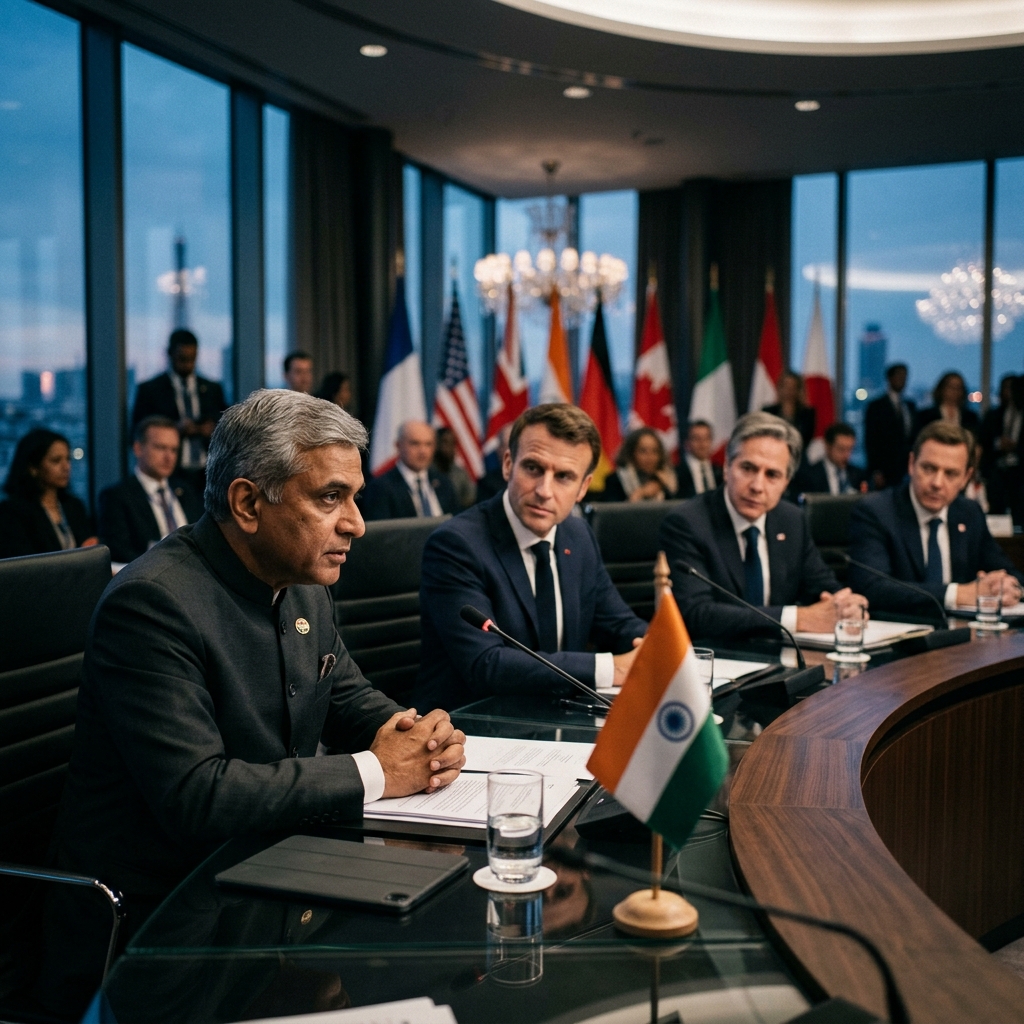
Prime Minister Narendra Modi’s Europe visit in June 2026 is more than a diplomatic stopover. It is a clear statement that India wants deeper links with Europe and the G7 while preserving the freedom to engage all major poles of power on its own terms. The visit arrives at a time when wars, supply-chain shocks, industrial policy, and geopolitical fragmentation are forcing countries to choose between alignment and autonomy.
For India, the answer has increasingly been to refuse that binary. Instead, New Delhi has embraced what analysts describe as multi-alignment: building issue-based partnerships with different blocs while avoiding permanent dependence on any one of them.
Why Europe Matters
Europe is not just another destination on the diplomatic calendar. It is a market, a technology partner, a standards-setter, and a political actor whose choices affect trade rules, green transition finance, digital regulation, and sanctions policy. Modi’s June 2026 trip to France and Slovakia signals that India sees Europe as central to its next phase of growth and strategic bargaining power.
France matters as a gateway to high-end defence, technology, and strategic coordination. Slovakia, meanwhile, carries symbolic weight because of the depth it can add to India’s outreach into Central and Eastern Europe, where New Delhi is trying to widen its footprint beyond the familiar big capitals.
The G7 Stage
Modi’s presence at the G7 is important not only because India is not a member, but because it has become a regular invitee whose voice is increasingly treated as relevant to global crisis management. That shift reflects India’s growing weight as a large economy, a major consumer market, and a country that speaks for many in the Global South.
This year’s G7 discussions, as reflected in advance briefings and reporting, centre on economic resilience, critical mineral supply chains, macroeconomic stability, and security challenges. Those themes line up closely with India’s own priorities: industrial growth, energy security, access to technology, and strategic autonomy.
The Multi-Alignment Logic
Multi-alignment is often misunderstood as fence-sitting. In reality, it is a deliberate foreign-policy method built around flexibility. India deepens ties with the US in one domain, strengthens strategic cooperation with Europe in another, works with Russia where needed, engages the Gulf for energy and diaspora ties, and keeps space open for the Global South.
That approach helps India avoid being trapped in a single camp at a time when the world is becoming more competitive and less predictable. It also lets New Delhi speak with more credibility when it argues that developing countries should not be forced to choose sides in conflicts they did not create.
What This Visit Signals
The 2026 Europe tour suggests that India is now trying to convert diplomatic visibility into practical leverage. If discussions on technology transfer, trade, defence, and critical minerals move forward, India can reduce vulnerabilities that come from overdependence on any one supply chain or partner.
It also signals a more confident India. The message is not that India wants to sit at the edge of the Western order, but that it wants to shape outcomes within it while retaining the right to disagree, diversify, and choose case by case.
Bigger Picture
India’s multi-alignment is emerging at the same time as Europe is itself seeking strategic insulation from shocks. That creates a natural overlap: Europe needs dependable partners, and India wants access, respect, and room to manoeuvre. The result is a diplomatic relationship built less on ideology and more on mutual necessity.
If India can use this moment well, it could strengthen its place as a bridge power: large enough to matter, flexible enough to work across camps, and independent enough to avoid automatic loyalty. The test will be whether diplomatic language turns into durable gains in trade, technology, and security.
Conclusion
Modi’s Europe outreach and G7 participation underline a central truth of Indian foreign policy in 2026: power is no longer measured only by alliances, but by the ability to engage many sides without losing strategic clarity. Multi-alignment is not a slogan; it is India’s attempt to protect its interests in a fragmented world.
Whether this approach becomes a long-term advantage will depend on execution. But the direction is clear: India wants to be present in every serious conversation, yet owned by none.