
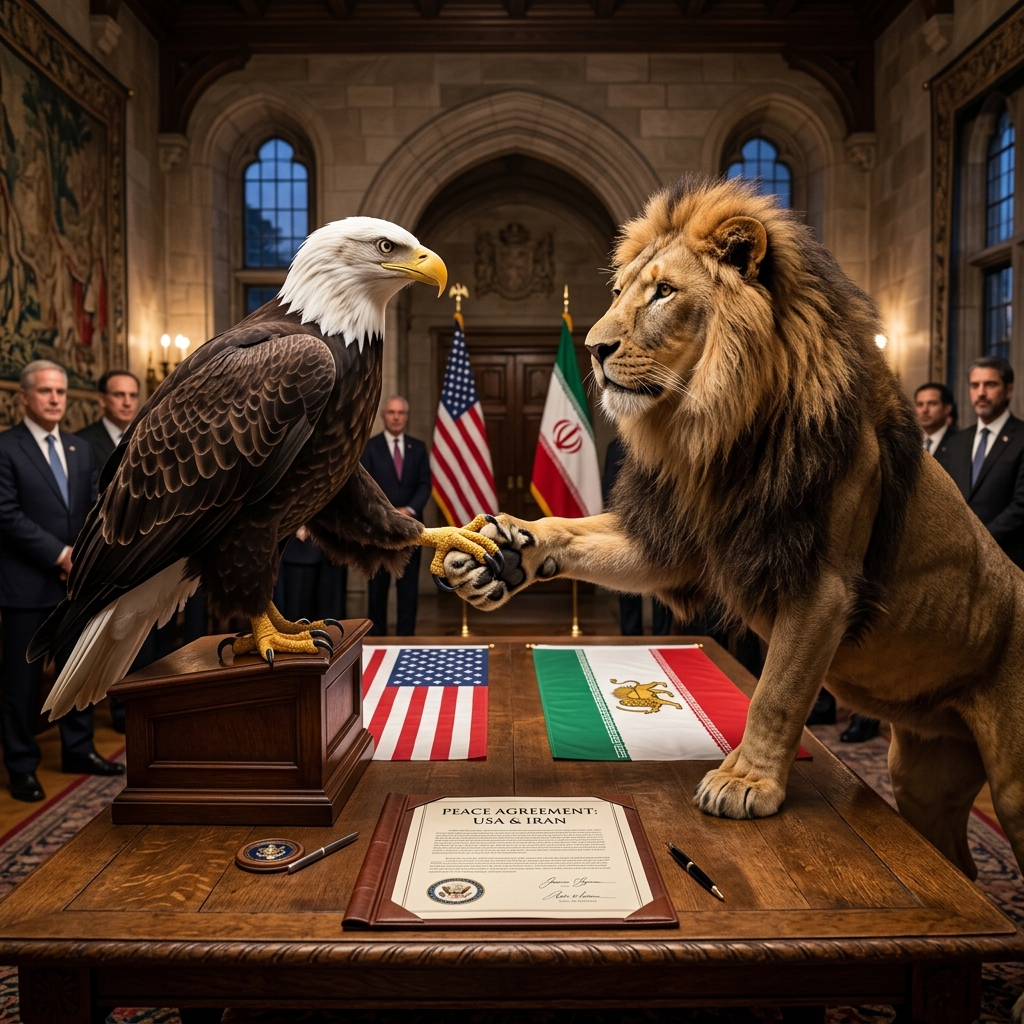
US-Iran Peace Deal: A Fragile Accord at the Edge of War
KEY FACTS AT A GLANCE
- Deal status: U.S. and Iranian officials have signalled that an agreement to end hostilities is close, with wording reportedly agreed and final details still fluid.
- Core terms under discussion: reopening the Strait of Hormuz, phased sanctions relief, release of frozen Iranian assets, and a nuclear framework that includes limits on enrichment and possible dismantling of parts of Iran’s program.
- Major pressure point: Iran insists on retaining some uranium enrichment capacity and wants sovereignty over the Strait of Hormuz, while Washington wants deeper restrictions and stronger verification.
- Context: The 2015 JCPOA expired in October 2025, leaving the current talks to build a new framework from scratch.
Introduction
The emerging US-Iran peace deal is not a classic peace treaty. It is a brittle attempt to freeze a fast-moving conflict, reopen one of the world’s most important shipping lanes, and buy time for a harder nuclear settlement. In practical terms, it is less about friendship than about preventing escalation and keeping oil, diplomacy, and military pressure from colliding at full force.
What makes the current moment unusual is that both sides appear to have accepted, at least temporarily, that direct war would be too costly. But neither side trusts the other enough to call the arrangement permanent, which is why the language around the deal has been so cautious, conditional, and evolving.
How The Talks Reached This Point
The path to this point began after years of tension and the collapse of the old nuclear architecture. The original JCPOA expired in October 2025, and Iran declared itself no longer bound by its terms. After that, the U.S. and Iran restarted talks in 2026, with indirect and then increasingly serious rounds in Geneva, Oman, and other diplomatic channels.
By spring and early summer 2026, reporting suggested the negotiations had narrowed to a few concrete issues: a freeze or suspension of enrichment, verification measures, sanctions relief, and the fate of Iran’s stockpile of enriched uranium. At the same time, a separate ceasefire track emerged after military escalation, giving the diplomacy an urgency it had lacked before.
What The Deal Appears To Include
The most widely reported framework is a phased arrangement. First, a ceasefire or hostilities pause would be extended. Second, the Strait of Hormuz would reopen or remain open for commercial shipping, removing a huge risk premium from global oil markets. Third, sanctions on Iranian oil and petrochemical exports would be eased or suspended in stages, while some frozen Iranian assets would be released.
The nuclear track is even more sensitive. Reporting suggests the U.S. wants Iran to stop pursuing nuclear weapons, accept major limits on enrichment, allow intrusive inspections, and potentially dismantle parts of its nuclear infrastructure. Iran, meanwhile, has insisted on retaining some enrichment rights and has pushed for a compromise that preserves national dignity as well as civilian nuclear capability.
Conclusion
The emerging US-Iran peace deal is best understood as a risk-management agreement, not a final reconciliation. It tries to stop the bleeding, reopen the world’s most strategically sensitive waterway, and create a path toward a nuclear framework that neither side fully trusts but both may now need.